
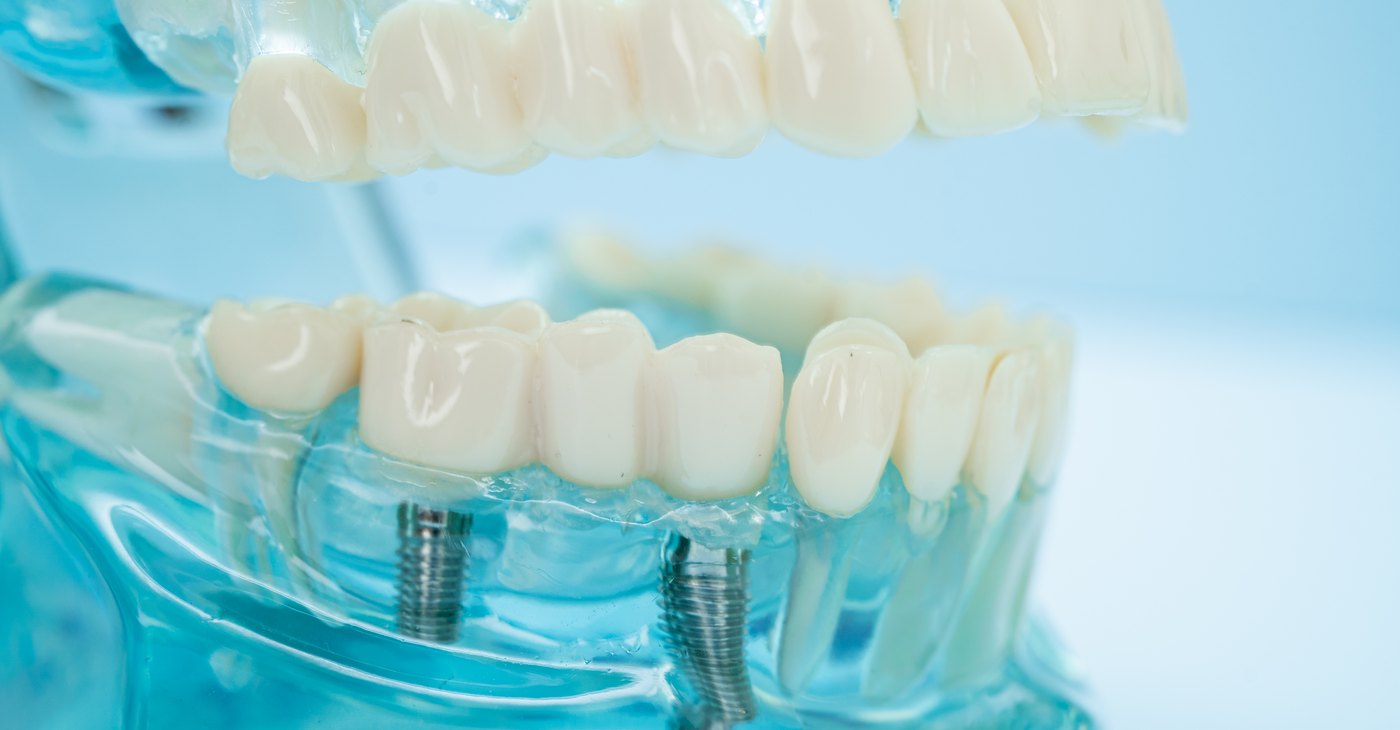
All-on-4 and All-on-6 are two techniques for replacing all the teeth of a full arch with a fixed prosthesis anchored on implants. The main difference is the number of implants: four in All-on-4 and six in All-on-6. All-on-6 distributes the forces better when there is enough bone, while All-on-4 makes it possible to treat cases with less available bone and, often, to avoid grafts.
What they are and what they share
Both techniques are designed for people who have lost all the teeth of an arch, or are about to lose them, and want a fixed solution that does not have to be taken in and out. In both, the full prosthesis is anchored on implants, and in many cases a provisional prosthesis can be fitted the very same day thanks to immediate loading. Both avoid the uncomfortable removable denture and restore a stable bite and a natural smile.
Key differences
- Number of implants: four in All-on-4 versus six in All-on-6.
- Force distribution: with six implants the chewing load is spread more evenly, which can be an advantage in arches with high chewing demand.
- Bone required: All-on-4 is designed precisely to make the most of the available bone, placing the rear implants at an angle, which makes it possible to avoid grafts in many cases.
Advantages of each technique
All-on-4 stands out for its versatility: by needing less bone, it opens the door to a fixed solution for people who would otherwise need longer preliminary treatments. All-on-6 offers, when there is enough bone, extra support that some specialists prefer for full arches with a strong bite. Neither is better than the other in absolute terms: the best technique is the one that fits your case.
The role of available bone
The quantity and quality of the bone are the factors that weigh most in the choice. When bone is scarce, All-on-4 is usually the natural option. If the specialist considers that the base needs reinforcing, a bone regeneration can be considered before the treatment. That is why the first step is always a study with imaging tests that shows precisely how much bone you have.
What the process is like
The treatment starts with a complete study and digital planning. On the day of surgery the implants are placed and, where possible, a fixed provisional prosthesis with immediate loading. After a few months of integration with the bone, the final prosthesis is fitted. If you want to understand one of these solutions better, you can read our article on All-on-4.
Frequently asked questions
Which one is more expensive?
All-on-6 usually costs somewhat more because it involves two more implants, but the indication is set by the clinical case, not just the price.
Will I have teeth the same day?
In many cases yes, with a provisional immediate-loading prosthesis while waiting for the final one. The specialist will confirm whether your case allows it.
Which one lasts longer?
Both are very stable, long-lasting solutions. What matters is not the number of implants itself, but good planning and proper maintenance.
Is the prosthesis removed for cleaning?
The prosthesis is fixed and you do not take it out yourself. It does need careful daily hygiene and check-ups, where it is sometimes removed in the clinic for a thorough cleaning.
Want to know which technique fits your case best? We will carry out a personalised study with no obligation. Request an assessment.


