What is jaw reconstruction?
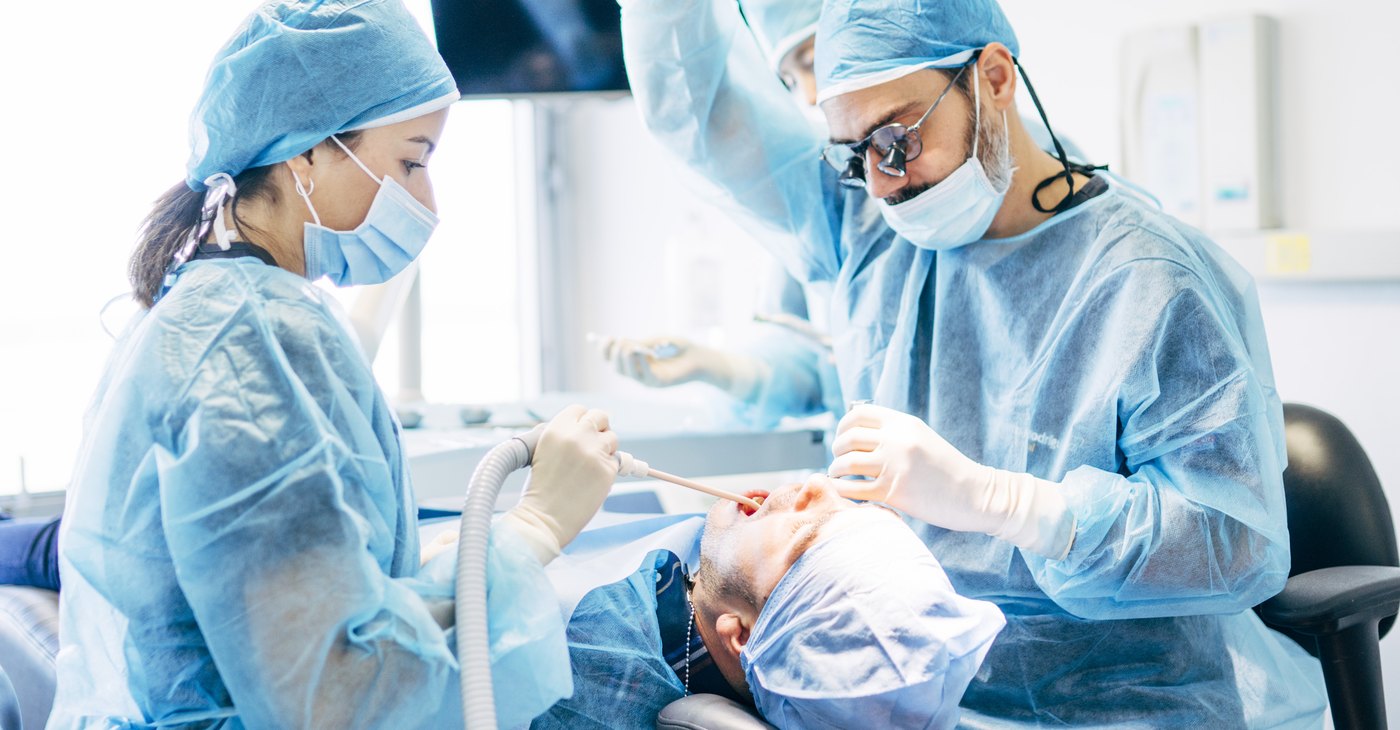
Jaw reconstruction (also called bone regeneration) is the set of surgical techniques used to rebuild lost bone in the upper or lower jaw, so that dental implants can be placed safely and with long-term stability.

The reconstruction of the bone of the upper or lower jaw aims to regenerate bone in cases where tooth loss has resulted in:
- Significant loss of bone tissue
- Traumatic or oncological sequelae
- Congenital syndromes
- Post-infection and post-cyst atrophies
When is an osseous reconstruction of the maxilla performed?
It is a fundamental procedure in dentistry to restore lost or damaged bone structure. At Implantarex, we have a team specialized in bone reconstruction that uses advanced techniques in case of:
- Loss of maxillary bone in order to place implants.
- Traumatic and oncologic sequelae.
- Congenital syndromes.
- Appearance of post-infection and post-cyst atrophies.
Benefits
The reconstruction of the maxillary bone offers a number of significant benefits for those who have experienced the loss or damage of bone tissue in this area. Thanks to this procedure the patient will be able to improve both functionally and esthetically, we explain why:
- Functional: you will be able to eat and chew correctly since you will have all your teeth (implants) after the treatment.
- Aesthetic: Having the smile already completed and without missing teeth, the patient will have greater self-esteem.
Techniques
The procedure is performed through a bone graft combined with autologous growth factors or fibrin and biological membranes. In some cases it is combined with stem cell techniques to improve ossification.
With this we recover enough bone support to place the dental implants, improving at the same time their aesthetics and functionality.
Types of bone graft
- Autogenous graft: bone from the patient (for example, from the chin area or the mandibular ramus). Highly effective, as the transferred bone contains living cells.
- Allograft: processed donor bone, safe and compatible.
- Xenograft: of animal origin, biocompatible, widely used as filling material.
- Synthetic (alloplastic) graft: biocompatible artificial materials that stimulate bone growth.
Common techniques
- Guided bone regeneration: the graft is protected with a biological membrane.
- Sinus lift: gains bone height in the back area of the upper jaw.
- Block graft: indicated for larger bone defects.
- Ridge expansion: widens the bone when it is too narrow.
Process and timing
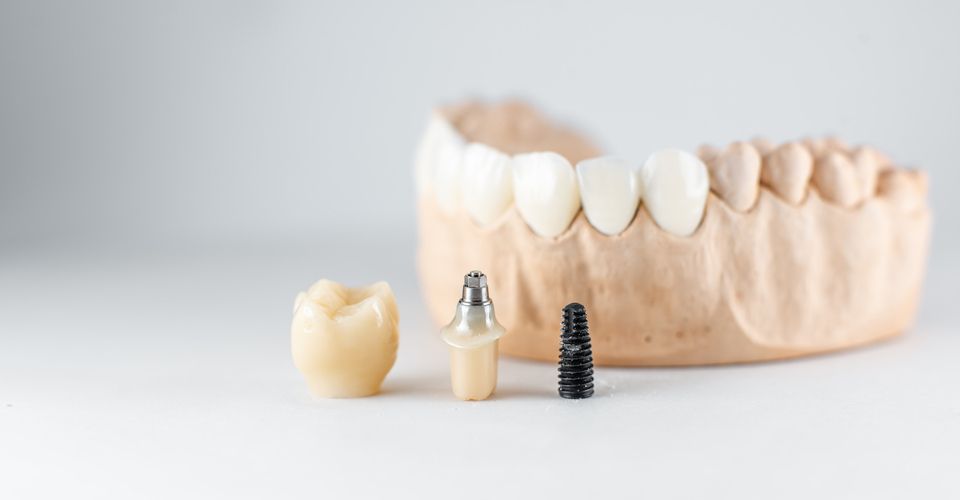
The treatment follows these steps: study with a 3D scanner, bone graft, healing and maturing period, and finally the placement of the implants. The graft usually needs several months to mature before implants can be placed. In cases with moderate bone loss, an All-on-4 type treatment can sometimes avoid the graft.
Frequently asked questions
Is it painful? The procedure is performed under anaesthesia, so no pain is felt during the intervention; afterwards there may be some discomfort, controllable with the prescribed medication.
Is it always necessary before an implant? No. It is only needed when there is not enough bone to hold the implant safely; this is confirmed with a radiological study.