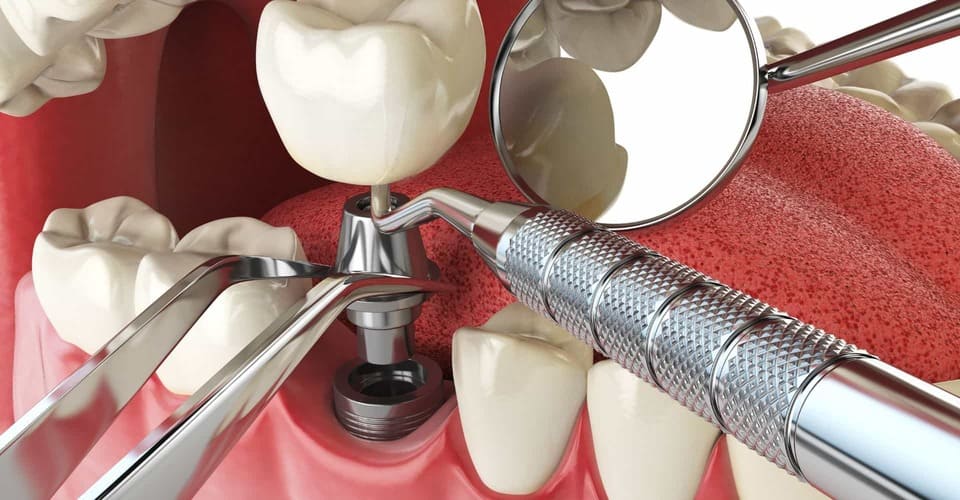
A dental implant is usually the best long-term option: it replaces the tooth root, does not damage the neighbouring teeth and preserves the bone. A bridge is faster and cheaper at first, but it requires grinding down the adjacent teeth and does not stop bone loss in the area. The choice depends on the state of your mouth, the bone available and your priorities.
What each option is
The implant is a titanium screw placed in the bone, replacing the tooth root, onto which a crown is fixed. It is an independent solution that does not need to lean on other teeth. The bridge, on the other hand, is a fixed prosthesis held in place by grinding down and covering the teeth next to the gap, which act as pillars. In other words, the bridge needs to sacrifice part of two healthy teeth to support itself.
Advantages and disadvantages
- Implant: it does not touch the neighbouring teeth, preserves the bone, is the most durable solution and is cared for like a natural tooth. In exchange, it requires minor surgery and a somewhat longer process, since the bone needs to integrate the implant.
- Bridge: it is faster, requires no surgery and has a lower initial cost. Its drawbacks are that it wears down healthy teeth and that, over time, the bone in the area left without a root tends to resorb, which can affect both aesthetics and fit.
How long each one lasts
In general, a well-cared-for implant can last for decades, while a bridge usually needs replacing sooner, partly through wear and partly because of changes in the supporting teeth. You can read more in our article on how long a dental implant lasts.
Price: short and long term
The bridge is cheaper at first, and that is its main advantage for anyone looking for an immediate solution. In the long run, however, the implant usually works out more cost-effective, because it avoids having to treat the ground-down teeth later and because its lifespan is longer. It pays to think about the cost in years, not just the initial outlay.
Impact on neighbouring teeth and bone
For many specialists this is the most important difference. The implant fully respects the teeth on either side and keeps the bone stimulated. The bridge, by resting on the adjacent teeth, exposes them to greater wear and does not prevent bone resorption under the section without a root.
When each one is recommended
The implant is ideal when you want a durable solution and to keep the rest of your teeth intact. If bone is lacking, a prior jaw reconstruction may be considered. The bridge can be a good alternative when surgery is contraindicated for health reasons, when the neighbouring teeth are already very damaged and would need crowns anyway, or when a more immediate solution is needed.
Frequently asked questions
Which option lasts longer?
The implant. Well cared for, it can last a great many years, while the bridge usually needs replacing sooner.
Which is more expensive?
The bridge is cheaper at first, but in the long term the implant usually pays off because it avoids extra treatment on the ground-down teeth and lasts longer.
Can you switch from a bridge to an implant?
Yes, in many cases. The specialist will assess the state of the bone and gums to plan the change in the most suitable way.
Does a bridge damage the teeth next to it?
Placing a bridge requires grinding down the neighbouring teeth, which removes part of their healthy structure. The implant avoids this step entirely.
Not sure which one suits you? We will explain it with no obligation at a first visit, with a study of your case. Book your appointment.