What is guided implant surgery?
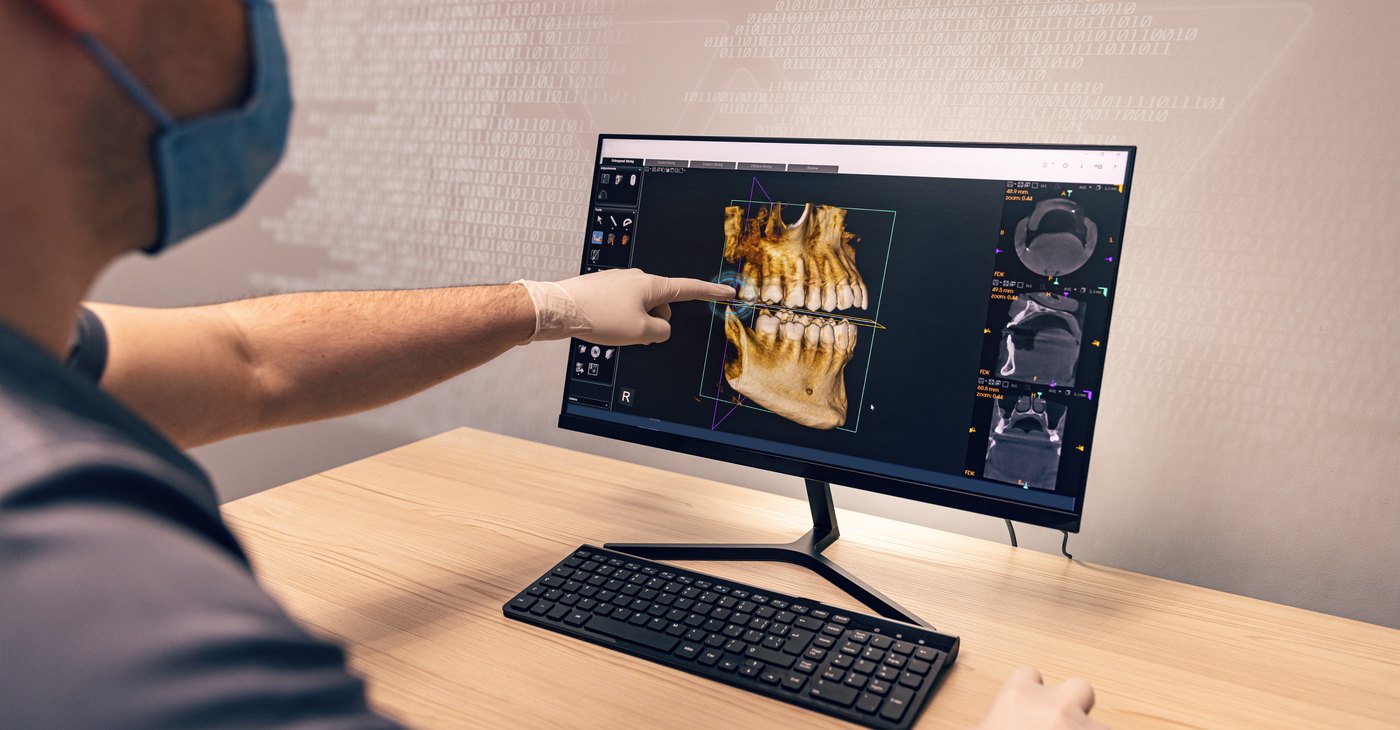
Guided surgery is an implantology technique that plans the whole procedure on a computer before touching the patient’s mouth. Starting from a 3D scan (CT or CBCT) and a digital scan of the mouth, the implantologist studies the available bone and decides the exact position, angle and depth of each implant.
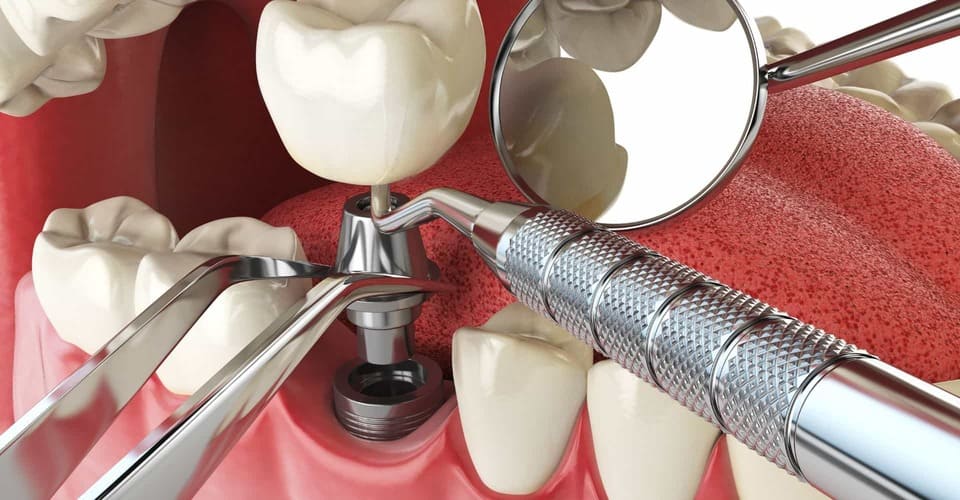
From that plan, a custom surgical guide is manufactured: a template that sits in the mouth during surgery and directs the instruments precisely to the planned position. The implant ends up exactly where it was placed in the digital study, with a minimal margin of error.
Advantages over conventional surgery
- More precision: the position of each implant is defined in detail in the 3D planning.
- Less invasive: in many cases there is no need to open the gum with a flap, which reduces swelling and discomfort afterwards.
- Shorter surgery: with everything decided in advance, the procedure usually takes less time than the conventional technique.
- Easier recovery: less tissue handling translates into a more comfortable recovery.
- Predictability: the result is known before starting, even in complex or full-arch cases.
How it works, step by step
- 3D study: a CT (CBCT) scan and a digital scan of the mouth reveal the available bone and the position of structures such as the dental nerve or the maxillary sinus.
- Digital planning: the implantologist places the implants virtually in the software, choosing position, angle and depth.
- Guide manufacturing: the plan is used to print a surgical guide made to measure for the patient.
- Guided surgery: the guide directs the drilling and placement of each implant in the planned position, often without the need for stitches.
When is it especially indicated?
Guided surgery adds value in practically any case, but it is especially useful when precision is critical:
- Full-arch rehabilitations with several implants, such as fixed prostheses on six implants.
- Patients with little bone, where making the most of the available bone matters.
- Areas close to delicate anatomical structures, such as the dental nerve.
- Patients with dental anxiety looking for a shorter, less invasive procedure.
Guided surgery at Implantarex
At our clinics in Barcelona, Zaragoza and Madrid we use 3D digital planning in implant treatments. The first consultation, including the assessment, is free: we study your case and tell you whether guided surgery is the right option for you.
Frequently asked questions about guided surgery
Does guided implant surgery hurt?
Not during the procedure: it is performed under local anaesthesia, like any implant placement. Being less invasive, recovery usually involves less swelling and discomfort than conventional surgery.
Is guided surgery more expensive?
It depends on each case, because it adds the study and the personalised guide. At Implantarex the first consultation with assessment is free, so you can know the fixed price of your treatment before deciding.
Does guided surgery help if I have little bone?
Yes; in fact it is one of its clearest indications: 3D planning makes the most of the available bone and selects the optimal position for each implant.